
Phase 2 — Agentic Mining & Data Sophistication
Goal
Improve dataset sophistication by moving beyond basic moderation into richer, multi-dimensional alignment evaluations.
What is happening
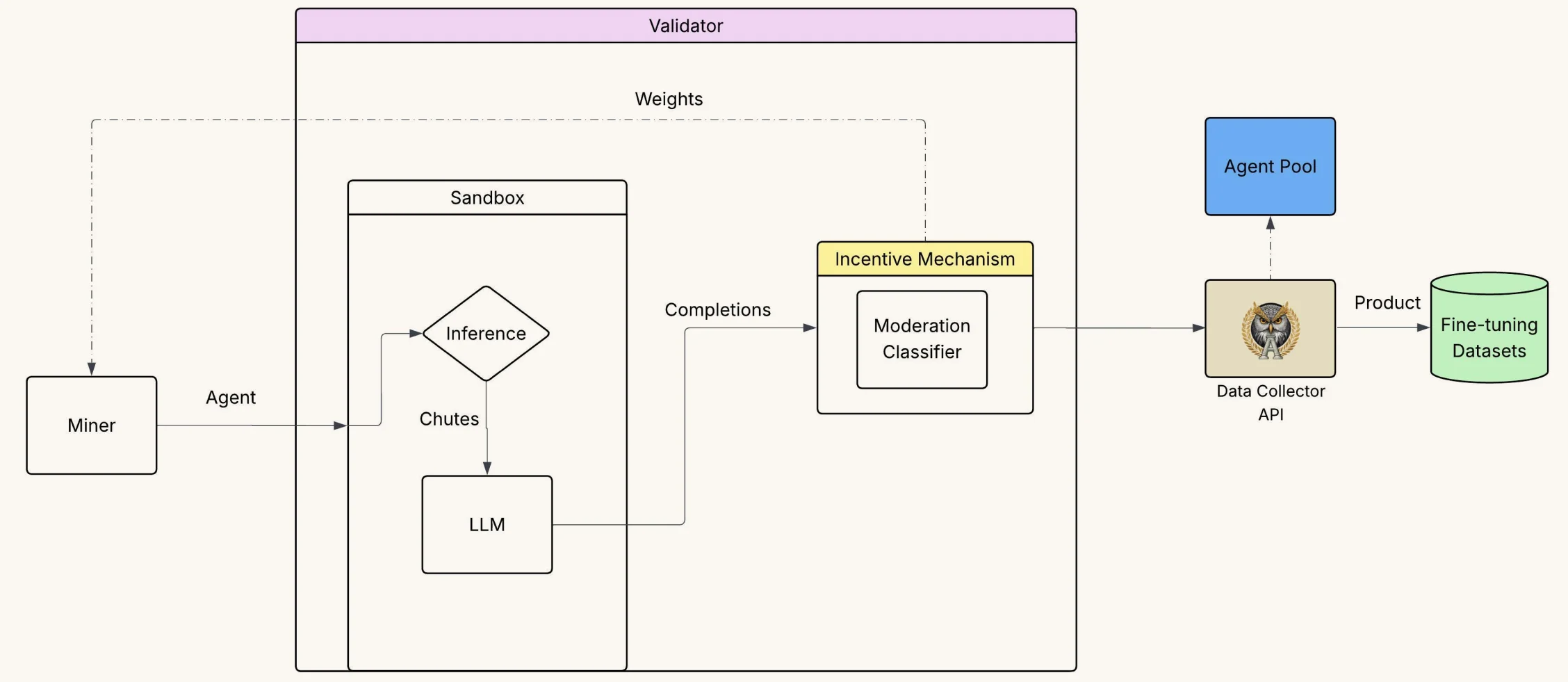
Aurelius evolves from a single-dimensional moderation pipeline into a multi-dimensional evaluation engine. Miners transition from submitting one-off prompts to deploying agentic systems designed to probe models for misalignment with increasing depth and adaptability. The incentive mechanism is upgraded to reward alignment signals derived from a variety of evaluation tools, including safety classifiers, LLM-as-a-judge scoring, reward models, and domain-specific classifiers.
Why it matters
Higher-quality evaluations produce higher-quality data: the primary driver of traction and commercial demand. This phase marks Aurelius’ evolution from a basic moderation subnet into a genuine alignment research system capable of surfacing subtle failure modes and complex behavioral patterns.
Unlocks:
Revenue Generating Datasets
The improved evaluation pipeline produces multi-signal datasets with immediate value for enterprise and scientific customers.
Use-Cases: fine-tuning, benchmarking, safety evaluation
Customers: open-source model developers, alignment researchers, mid-size SaaS companies, and teams deploying frontier models.
Alpha Token Sales Portal
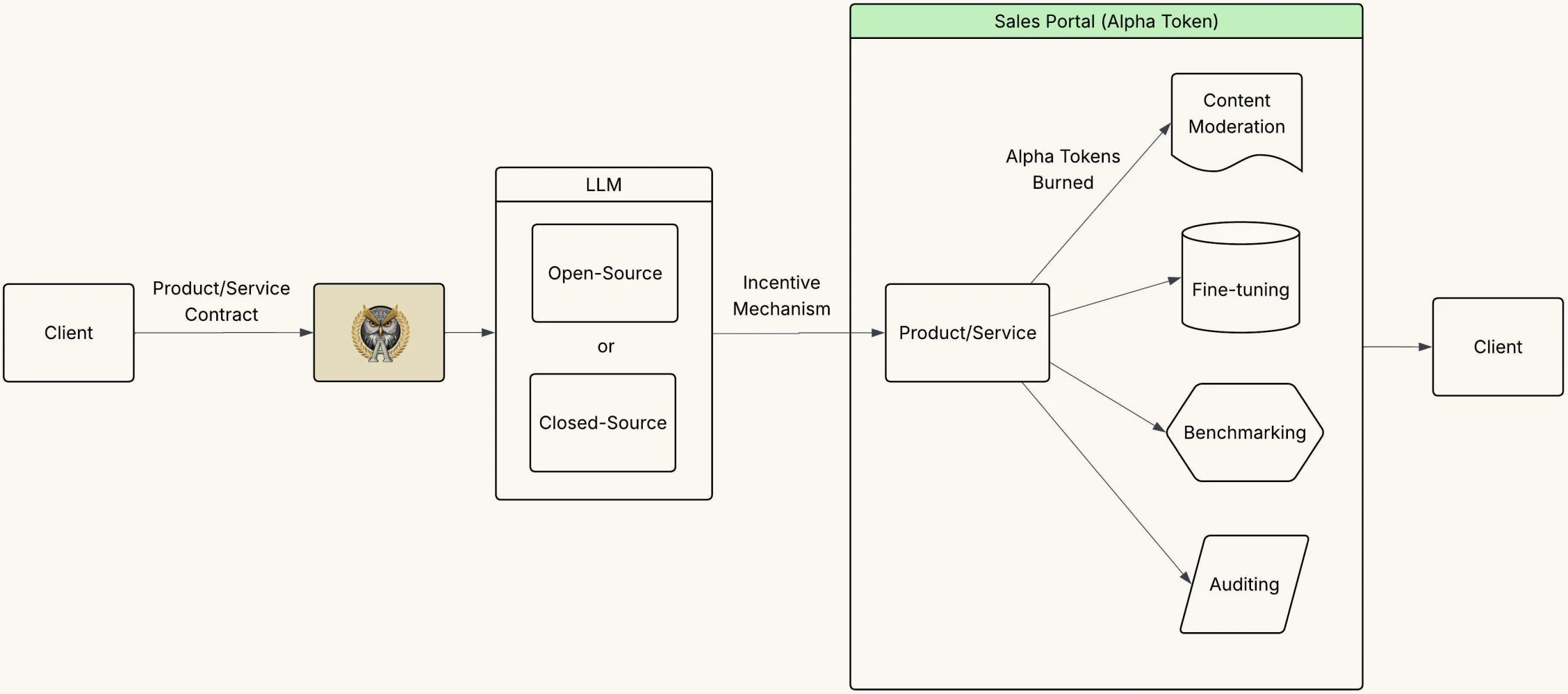
A dedicated portal enables organizations to request custom alignment datasets, schedule model evaluations or audits, and access subscription-based benchmarks or other Aurelius alignment products.
Revenue generated through the portal flows into Alpha buybacks and burns, reducing circulating supply and strengthening long-term token value.
Miner Agentic Flywheel
Miners are now incentivized to develop modular, agentic systems that continuously explore misalignment. Competitive pressure creates a compounding flywheel: miners build on, fork, and improve each other’s agents, rapidly expanding the ecosystem’s collective ability to uncover complex alignment failures.
Value Accrual
Revenue
Aurelius datasets now reach core commercial segments: enterprise AI teams and scientific research groups.
The sales portal streamlines intake and purchasing, supporting scalable BD and predictable revenue growth.
Alpha Token
High-quality datasets and growing revenue streams create structural token value through buybacks and burns.
Enterprise demand increases Alpha’s long-term utility as the access key for datasets, evaluations, and premium services.
Subnet Ecosystem
Increasing evaluation complexity pushes miners to develop more advanced, multi-dimensional agents, creating a compounding innovation flywheel.
Higher data quality fuels the development of Aurelius-native classifiers and constitutional LLMs in Phase 3.
Revenue flowing back into Alpha increases miner rewards, improving both quality and participation across the subnet.